
Behind the Scenes of Car and Driver’s Lightning Lap
Special Editorial by Eli Bayless
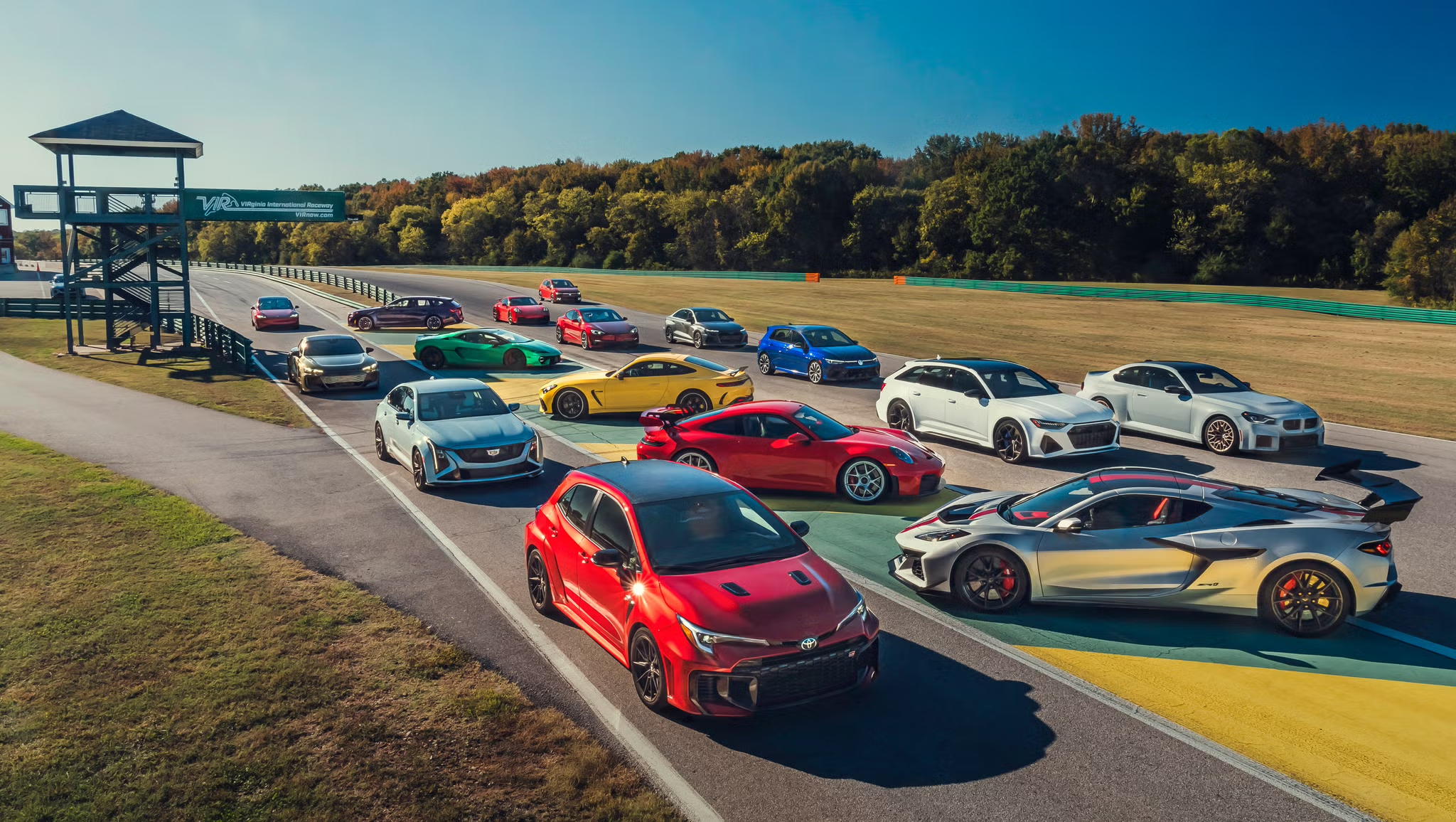
Image courtesy Michael Simari - Car and Driver
Each year, Car and Driver publishes its Lightning Lap feature, where the magazine gathers a diverse field of performance cars and times them around the Grand Course at Virginia International Raceway (VIR). For enthusiasts, the results provide one of the most respected performance benchmarks in the automotive world.
The final product — an 11–12 minute YouTube video accompanied by a detailed editorial feature — appears relatively simple on the surface. A series of cars complete hot laps while viewers watch the action unfold with speed, lap-time, and telemetry overlays. Behind that video, however, is a production effort that closely resembles a small motorsports event combined with a media shoot.
Curious about how it all comes together, I spoke with Carlos Lago, Deputy Editor of Video at Car and Driver, and explored the process behind the annual test. What emerges is a production that blends journalism, engineering, logistics, and filmmaking in equal measure.
A Wide Range of Performance Cars
One of the defining aspects of Lightning Lap is the breadth of vehicles it brings together. The test spans the full spectrum of modern performance engineering, from attainable hot hatches to high-end supercars and even race machinery. Recent entries have ranged from accessible performance cars like the Volkswagen Golf GTI and Toyota GR Corolla to larger high-performance machines such as the Cadillac CT5-V Blackwing and BMW M5 Touring. At the upper end of the spectrum, the field often includes exotic performance cars and track-focused machines, with vehicles like the Chevrolet Corvette ZR1, Lamborghini Temerario, and Lamborghini Huracán Super Trofeo Evo2.
Seeing such a wide range of vehicles circulate the same demanding circuit offers a unique look at how performance engineering continues to evolve. Each vehicle featured in the video also has its own story. Car and Driver provides detailed breakdowns of every car tested including lap times, engineering insights, and driving impressions, which are linked within the video’s description.
The Team Behind the Test
While Lightning Lap is widely recognized by enthusiasts, fewer people know the individuals responsible for organizing and executing the event. The program is led by K.C. Colwell, Executive Editor at Car and Driver, and Dave VanderWerp, the magazine’s Director of Vehicle Testing. Colwell has been part of the Car and Driver editorial team since 2004 and previously served as the publication’s testing director. Over the years, he has been deeply involved in developing the magazine’s testing procedures and has even set production-car lap records at VIR during Lightning Lap. VanderWerp brings more than two decades of automotive engineering and testing experience to the role. Today, he oversees the publication’s vehicle evaluation programs, including Lightning Lap. Together, Colwell and VanderWerp help shape the testing standards, vehicle selection, and procedures that define the event each year.
A Production Crew, Not Just a Camera
Filming the Lightning Lap video requires far more than a few cameras and a couple of editors. Each year, much of the Car and Driver editorial and media team relocates from their Ann Arbor headquarters to VIR for roughly a week. Dozens of staff members participate, including editors, photographers, videographers, and technical specialists. For several days, the paddock effectively becomes a working media studio.
Carlos Lago described Lightning Lap as one of the most demanding, and rewarding, efforts the team undertakes each year: “Few events demonstrate the skill, knowledge, and capabilities of the Car and Driver team like Lightning Lap. It's a pressure cooker for everyone involved, from setting lap times and making sure those times are properly recorded, to a logistics layer that seldom gets covered: arranging vehicles, tools, spare wheels and tires, lodging, food... the list goes on. It's also the event we look forward to the most as a team.”
Before any car heads onto the circuit, the team works through a careful preparation routine. Cameras must be powered and recording, data loggers installed, tire pressures verified, and telemetry systems initialized. A quick tap of the horn before leaving pit lane provides a reference point that later allows editors to synchronize video and data during post-production. When dozens of cars, cameras, and data streams are being managed simultaneously, that level of discipline becomes essential.
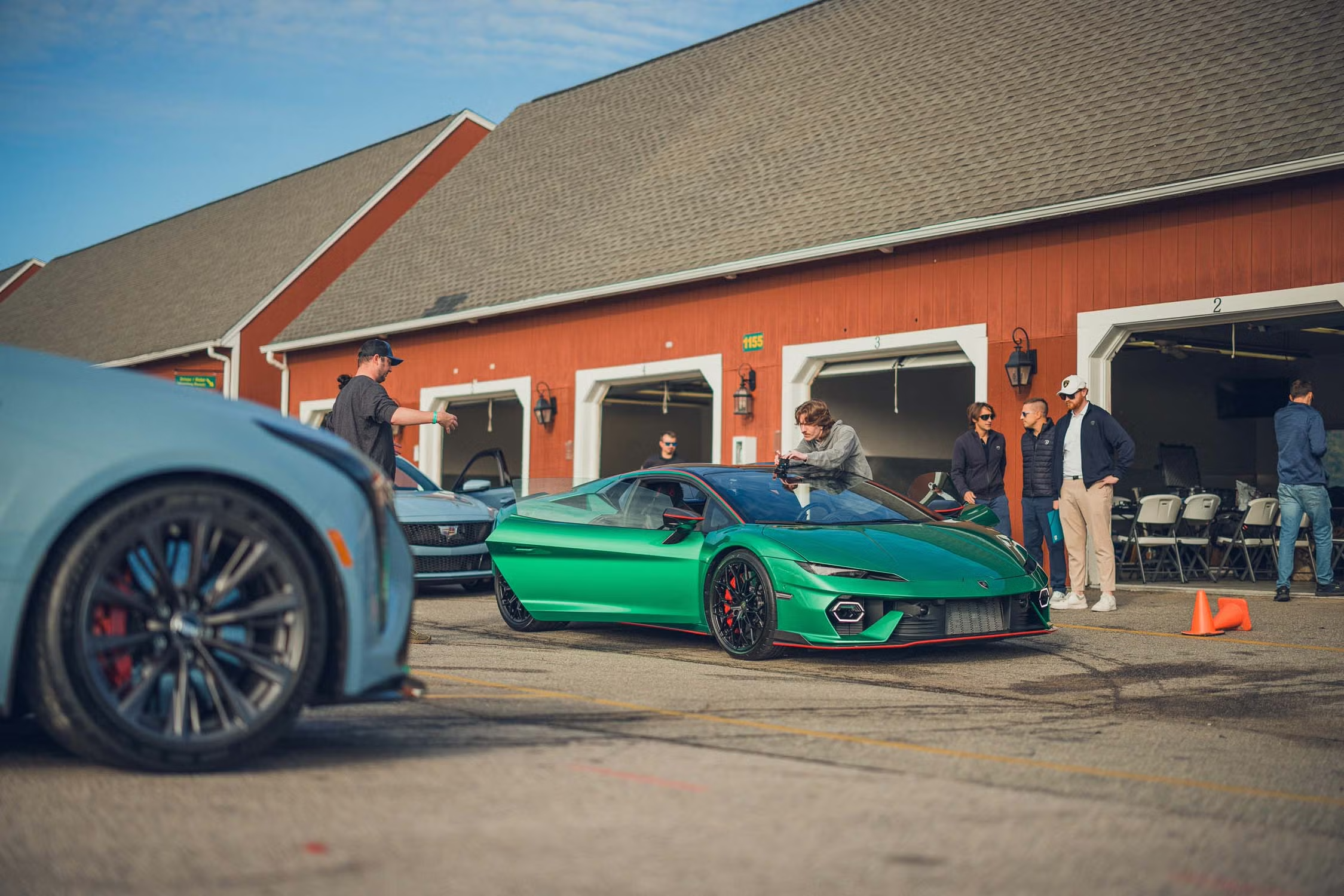
Image courtesy Michael Simari - Car and Driver
Capturing the Action
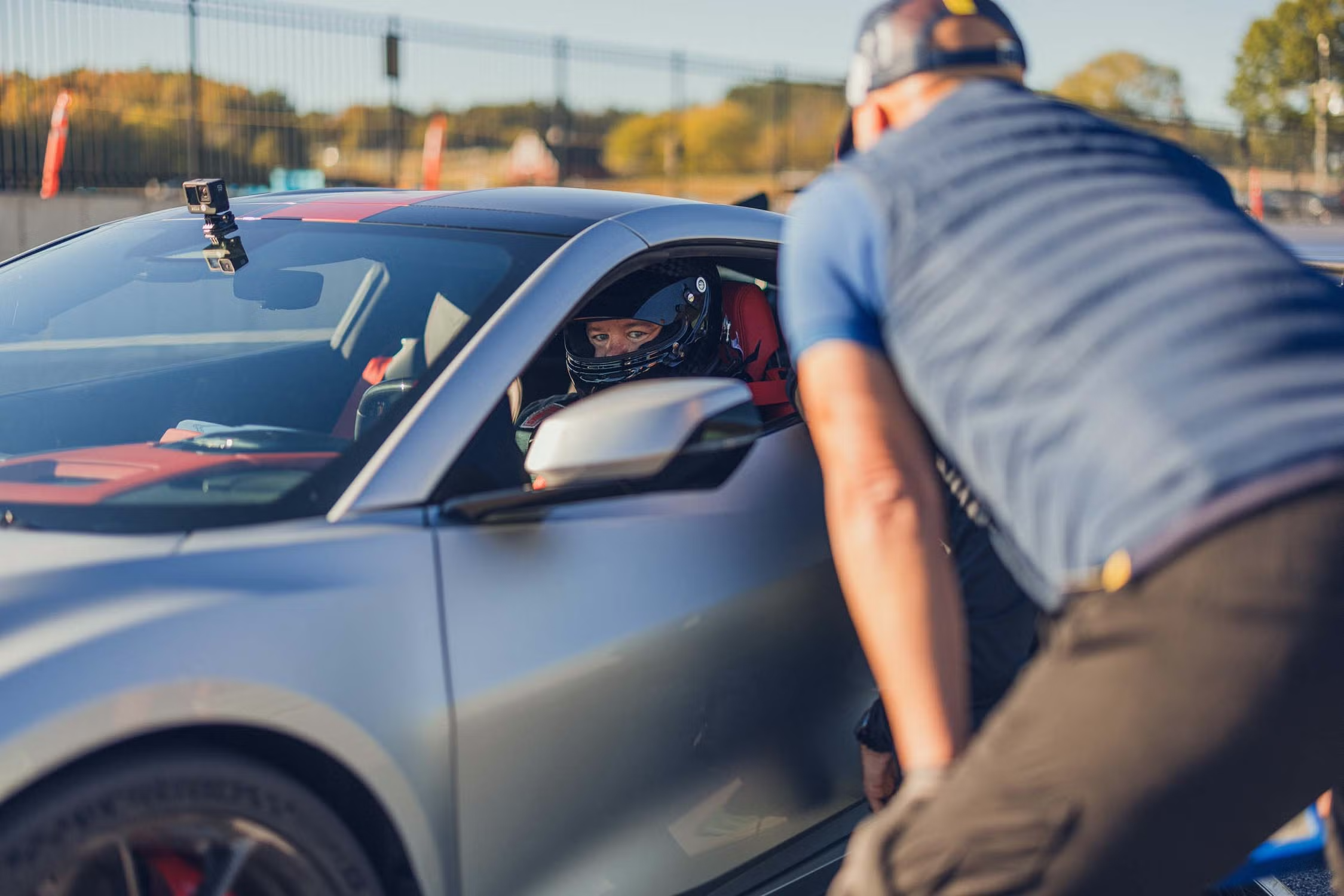
Every vehicle participating in Lightning Lap is equipped with multiple onboard cameras designed to capture the driver’s perspective along with additional interior or exterior angles. These views form the backbone of the video presentation, placing viewers directly in the cockpit during each timed lap.
Additional footage is gathered throughout the circuit. Drone operators capture aerial perspectives, photographers position themselves trackside at key corners, and camera vehicles record rolling footage as the cars circulate the track. Importantly, the cameras remain active during every lap of every session, not just the fastest attempt. A driver’s quickest time can occur at any moment during a run, and recording continuously ensures that the production team never misses the lap that ultimately counts. By the end of the test week, the team typically returns home with terabytes of raw footage.
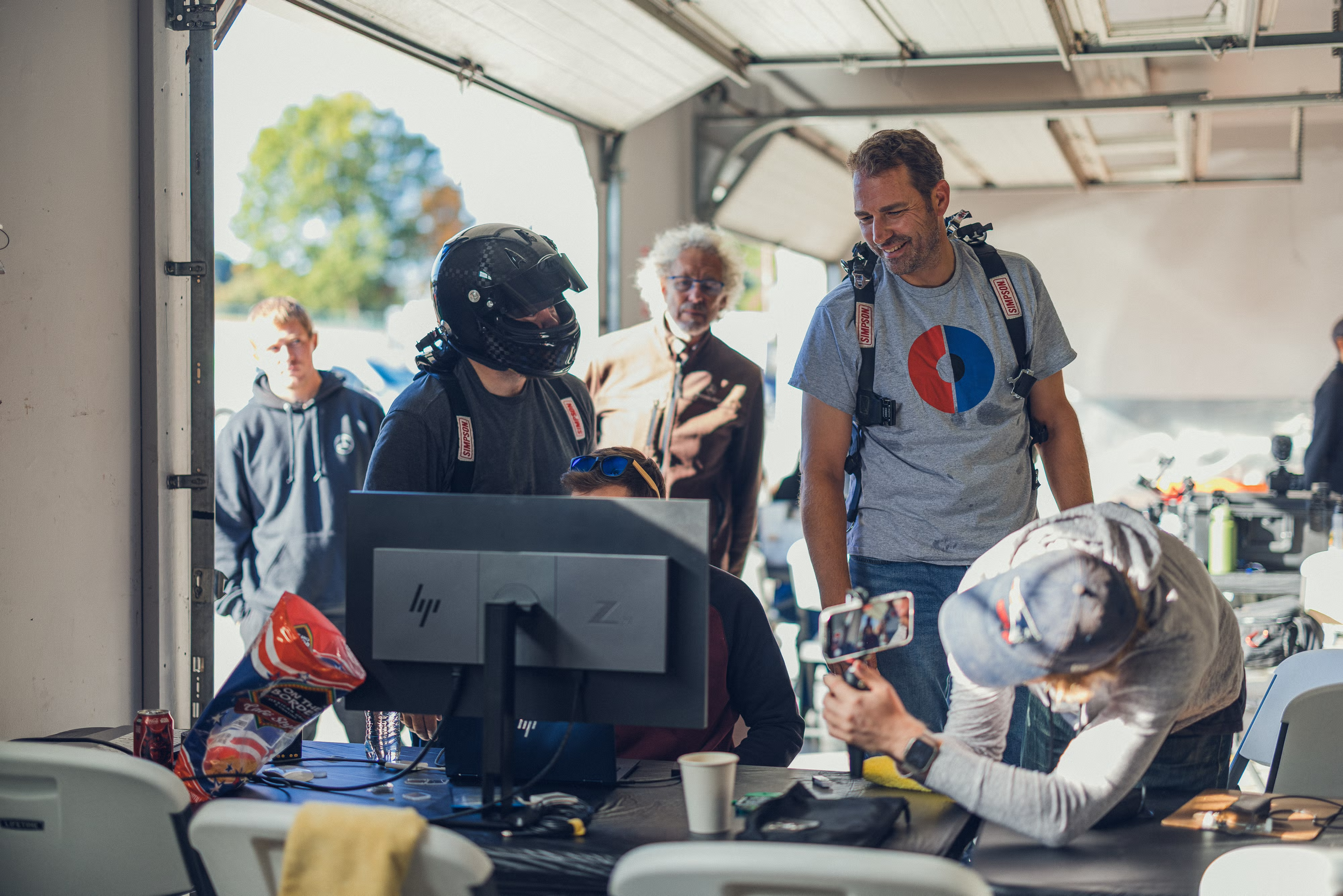
Image courtesy Michael Simari - Car and Driver
Turning Laps into Data
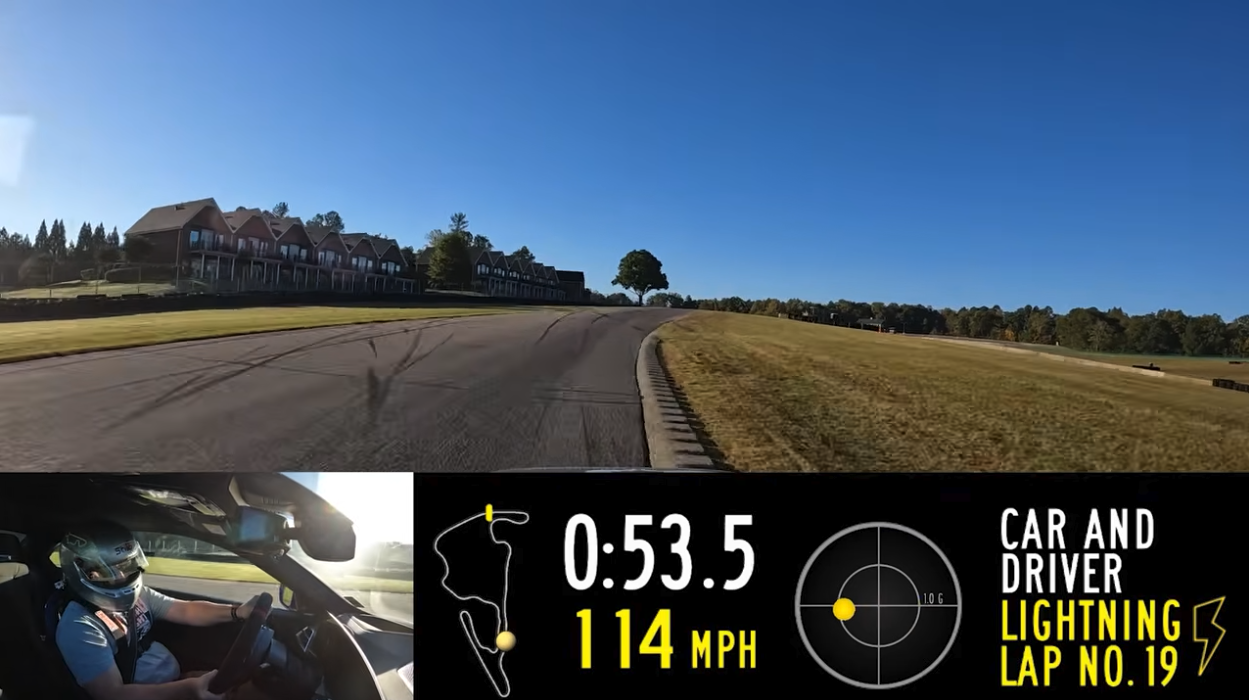
One of the defining features of the Lightning Lap video is the telemetry overlay that accompanies each run. Viewers can see the vehicle’s speed, lap time, and other performance metrics in real time as the car navigates VIR’s demanding layout. That data comes from Racelogic VBOX systems, high-precision GPS-based data loggers widely used in professional vehicle testing. Each driver carries a VBOX unit from car to car throughout the event, ensuring that every lap is recorded using the same equipment and measurement standards.
Screenshot by Eli Bayless via Car and Driver, Lightning lap 2026
The VBOX records speed, location, lap time, and g-forces multiple times per second. During editing, that data is synchronized with the video footage using the horn signal captured at the start of the run. Once aligned, the data becomes the telemetry graphics viewers see in the final video. The result is a presentation that combines driving footage with precise performance data, allowing viewers to understand not just what the car is doing, but how it achieves its lap time.
Screenshot by Eli Bayless via Car and Driver, Lightning lap 2026
Two Decades of Consistency
Lightning Lap is approaching a milestone year. The most recent installment marked Lightning Lap 19, with the twentieth edition scheduled for the coming season. According to Lago, while the scale of the event has evolved, the core principles have remained largely unchanged. In the early years, editors actually drove the test vehicles from Michigan to VIR, completed their timed laps, and then drove them back, giving the event a road-trip element. Today the cars are shipped to the circuit, and many arrive with manufacturer support teams and technical resources.
Despite those changes, the objective remains the same: maintain consistent testing conditions year after year so that the results clearly show the progress of automotive technology. That consistency has led to some surprising comparisons. Modern performance EVs, for example, have begun posting lap times that rival or exceed cars that once defined the segment. An Audi RS e-tron GT now laps VIR faster than the 2012 Corvette ZR1, something that would have seemed unlikely not long ago.
The Human Side of Lightning Lap
While Lightning Lap is known for its data and lap times, the event also has a strong element of camaraderie. For nearly two decades, much of the Car and Driver team has temporarily relocated from Michigan to southern Virginia each fall to conduct the test. Editors, photographers, videographers, and technical staff spend long days together in the VIR paddock reviewing data, preparing cars, and capturing the footage that ultimately becomes the Lightning Lap video and magazine feature.
The atmosphere often resembles a professional racing paddock. Manufacturers arrive with technicians and equipment, editors review telemetry data between sessions like race engineers searching for tenths of a second, and the production team is often on track before sunrise capturing images in the best light. At the same time, the event has a distinctly human side. Staff members share meals, trade stories, and spend late nights reviewing lap times and footage together. Over the years, Lightning Lap has become something of a tradition: A week where professional responsibilities blend with the shared enthusiasm that drew many of them to automotive journalism in the first place.
The Result
The finished Lightning Lap video runs just over ten minutes, but it represents days of preparation, extensive data collection, and a remarkable amount of captured footage. For viewers, the video offers a clear and engaging way to compare how a wide range of performance cars behave on the same challenging circuit. For the team producing it, Lightning Lap remains one of the most complex and collaborative projects of the year. It is a reminder that the automotive content enthusiasts watch online often requires the same level of planning, teamwork, and discipline that goes into the vehicles being tested.
For members who want to explore the results in greater depth, Car and Driver also publishes a detailed written feature that breaks down each vehicle’s performance and lap time.
Explore More Lightning Lap Coverage: Read the Full Lightning Lap Article | View Behind the Scenes at Lightning Lap 2026 in Photos
