
A Driver’s Journey: Learning to Share the Track
A SPECIAL EDITORIAL SEGMENT BY ELI BAYLESS
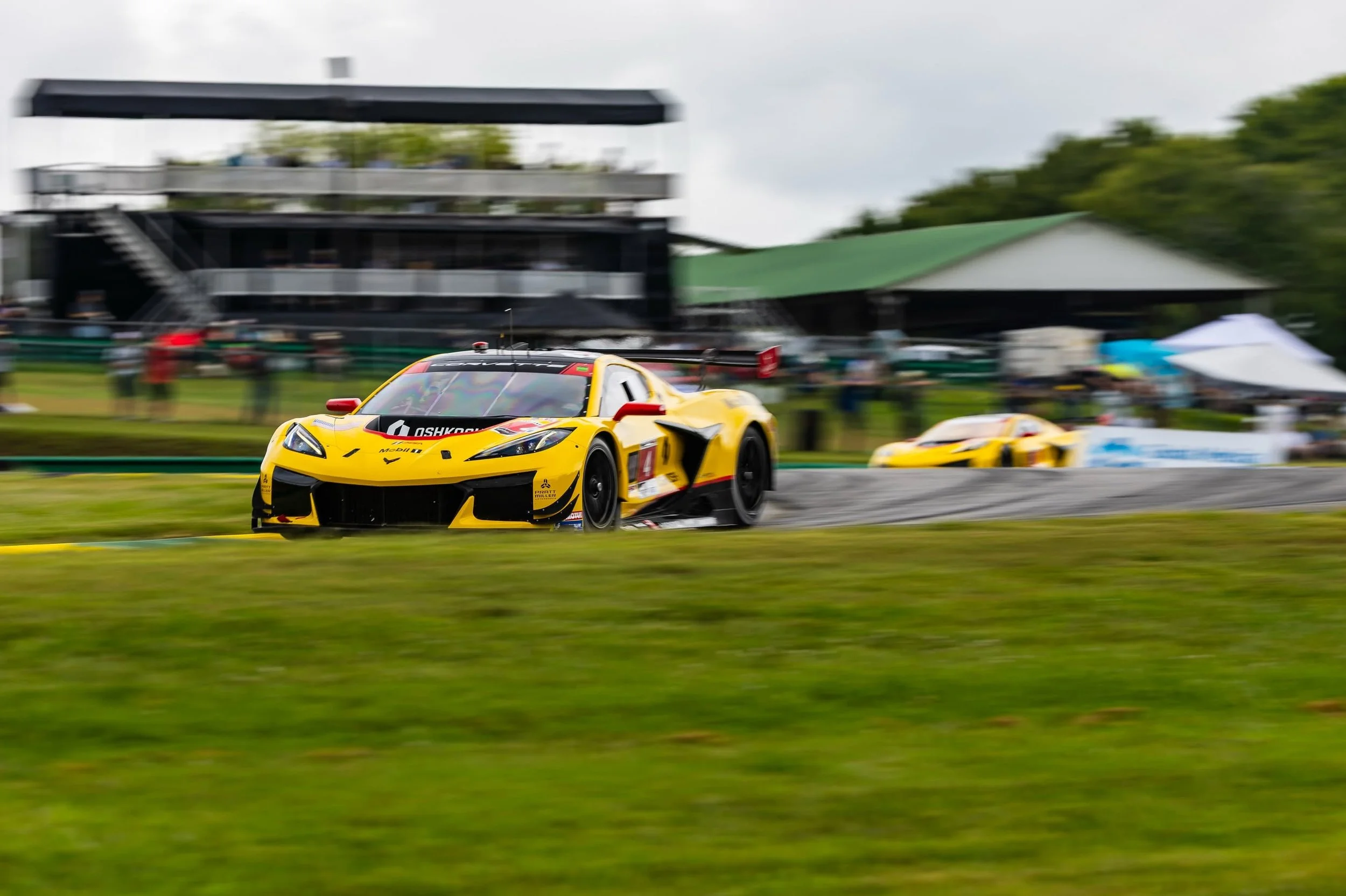
Photo courtesy of Pratt Miller Motorsports
One Novice Driver's Questions About Traffic, Passing and Staying Out of Trouble
Over the last 20 years, I've spent a lot of time around racetracks. I've watched professional races, worked in motorsports, stood in paddocks and pit lanes, and spent the last several years helping tell the story of a place built specifically for people who love driving.
But there's one important thing I've never done: I've never actually driven a car on track.
That's about to change.
As Motorsports Gateway prepares to welcome our members onto the South Circuit, I'm approaching that opportunity from a very different perspective than some of the experienced drivers who will be joining me. I have a lot to learn, and I'm genuinely excited about that. But I also have some apprehension. Interestingly, it isn't necessarily the speed that concerns me most. It's the other cars.
What happens when I'm sharing the circuit with someone who has considerably more experience than I do? What happens when that driver catches me? How do I know when to stay on my line, when to let someone by and when I should change what I'm doing?
And perhaps the question lurking behind all of those: How do I make sure my inexperience doesn't create a problem for somebody else?
Watching It Happen at the Highest Level
Those questions were on my mind recently while watching Alexander Sims and Corvette Racing by Pratt Miller Motorsports at Virginia International Raceway.
On the opening lap, Sims found himself side-by-side with another car through VIR's high-speed Esses. The situation developed quickly, the available pavement disappeared, and the Corvette ended up hard in the tire barrier.
This was professional racing. Sims and the drivers around him operate at a level I'll never pretend to approach. They're competing for position, championships and victories. I'm not.
But watching the incident reinforced something I've been thinking about as my own first laps get closer. If even professional drivers have to constantly evaluate the cars around them, how should someone like me learn to do it?
So I started asking questions.
The First Thing I Needed to Understand: This Isn't Racing
This may sound obvious, but I think it's an important distinction for someone entering a track environment for the first time. My job isn't to beat the car next to me into Turn 1. I'm not defending a position. I'm not trying to out-brake someone. And if another driver catches me, allowing that car to pass doesn't mean I've lost anything. I'm there to learn.
That's also why organized performance-driving environments establish procedures for managing drivers with different levels of experience. Novice drivers aren't simply sent onto a circuit and expected to figure out traffic at speed. There are rules governing where passing can occur. There are procedures for communicating between cars. Drivers are grouped according to ability and experience. And, perhaps most importantly, there are track personnel there to help manage the experience.
Understanding that immediately makes the prospect of sharing the track feel different to me.
Predictability May Matter More Than Speed
My natural instinct when imagining a faster driver approaching from behind is that I should "get out of the way." I'm learning that may be exactly the wrong instinct. An experienced driver doesn't necessarily need me to disappear. They need to know what I'm going to do.
If I suddenly move across the track because I'm watching my mirror instead of looking ahead, I've potentially created a much more difficult situation. If I stay predictable and follow the procedures I've been taught, the more experienced driver has something much more valuable than an empty track. If I drive predictably, the driver behind me knows what to expect.
That's reassuring because being predictable is something I can learn long before I'm fast.
I Don't Have to Make Every Decision Myself
This may be the biggest misconception I've had about getting on track.
From the outside, performance driving looks intensely individual. One driver. One car. A series of decisions happening very quickly. But particularly as a novice, I won't be expected to arrive knowing how to make all of them. That's what instruction, driver briefings, passing rules, flags, run groups and track control are for. If another car catches me, there is a defined process for allowing it to pass. If I catch another car, there is a defined process for me to follow. And if I'm uncomfortable with a developing situation, there's no prize for forcing it. I can wait.
That last point may be the most important one for me to remember.
What I'm Starting to Realize
I suspect one of the biggest adjustments I'll have to make is redefining what a successful first day looks like. It probably won't be measured by lap time. It won't be how late I brake or how quickly I learn the racing line.
For me, success may be much simpler.
Did I become more comfortable in the car? Did I learn to look farther ahead? Did I use my mirrors without becoming consumed by them? Did I communicate clearly with the drivers around me? Was I predictable? Did I finish each session understanding something I didn't understand when it began?
I have found that there is a useful philosophy in novice performance-driving instruction: Learning to safely share the track is one of the fundamental skills. Speed comes later.
I like that.
I'm still nervous about my first time sharing the South Circuit with other cars. I actually think a little nervousness is probably healthy. But I'm also beginning to understand that the solution isn't simply becoming brave enough to drive fast around other people. It's learning the system. It's understanding what the other drivers expect from me. It's developing awareness and predictability.
And it's recognizing that every experienced driver I'll eventually share the track with was, at some point, exactly where I am now.
